

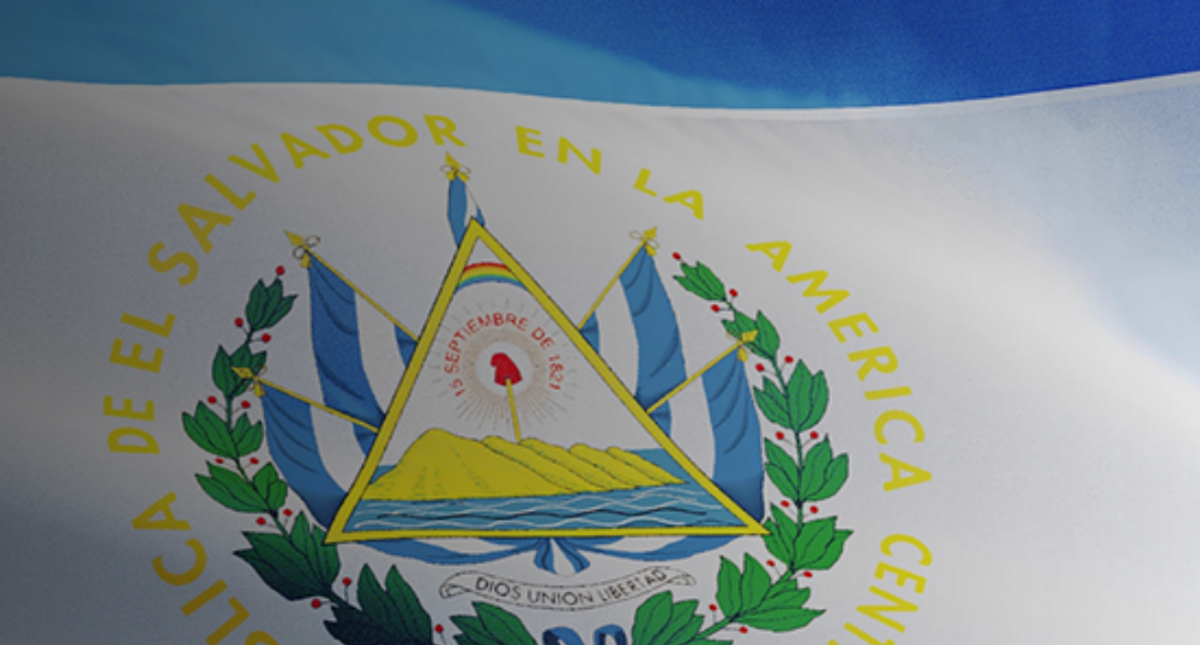
El Salvador rolled out a state-supported remittance platform on Tuesday that lets eligible users in the United States send digital dollars to verified recipients for a flat $2 fee, marking a significant pivot toward stablecoin-based payments five years after the country made Bitcoin legal tender.
The app, called Sivar, settles transactions on Base, the layer-2 network operated by Coinbase (COIN). The cryptocurrency exchange is providing the payment infrastructure, while technology firm Modveon built the platform. More than 25,000 Salvadorans registered before the official launch, Coinbase said in its announcement.
The rollout places remittances at the center of a new national digital service. Salvadoran families received nearly $10 billion from abroad in 2025, according to central bank figures, making the remittance corridor a critical economic lifeline for the Central American nation.
How Sivar Moves Money
A sender in the US funds a transfer with a debit card through Coinbase Onramp, and each user receives a noncustodial wallet inside the app. Coinbase's APIs route payments between verified participants while stablecoins settle transactions on Base, with the blockchain process operating behind the app's payment interface.
Recipients can withdraw cash at more than 1,000 locations across El Salvador. The $2 transfer fee remains constant regardless of the amount sent, while transfers within El Salvador are free. The app displays any cash withdrawal fee before a user confirms the transaction, according to Sivar's FAQ.
The fixed fee structure means the charge takes a smaller share of larger transfers. On a $100 remittance, the $2 fee equals 2% of the amount sent. On $1,000, it drops to 0.2%. Those calculations cover the advertised transfer fee; recipients choosing cash pickup can check the withdrawal charge in the app.
Sivar combines payments with verified identity and community features. Users can verify their identity through El Salvador's government login service and join groups linked to their address. The app also supports official announcements, local discussions, and polls. People without an identity document can explore parts of Sivar, according to the FAQ.
Modveon describes Sivar as its first national deployment. The company's website lists El Salvador's Bitcoin Fund Management Agency among its investors. Sivar operates separately from Chivo, the country's earlier public Bitcoin wallet.
A Shift in Digital Payments Strategy
El Salvador adopted Bitcoin as legal tender in September 2021 under President Nayib Bukele, but everyday payment use remained limited. A 2024 survey by a university opinion institute found only 8.1% of respondents used Bitcoin to buy or pay for something that year. An IMF study put remittances sent through crypto wallets at about 1.75% of total transfers.
Policy changed under the country's $1.4 billion IMF lending program. Lawmakers made Bitcoin acceptance voluntary in 2025 and restricted tax payments to US dollars. This month, the IMF said Chivo's majority ownership and operational control had passed to a private operator, with the government retaining a minority stake and custodial duties for customer assets.
The stablecoin app enters that altered payments market while the country still holds Bitcoin. The IMF said documented reserve growth since its first review came from private donations, with no public funds used, and it expects no further accumulation beyond those documented donations.
Coinciding with the fourth anniversary of its Bitcoin Law, El Salvador recently purchased an additional 21 BTC, increasing the country's total holdings to 6,313.18 BTC, valued at approximately $701 million. The move underscores the government's ongoing commitment to cryptocurrency as a reserve asset even as it shifts focus to stablecoin-based payment systems for the wider population.
Small Nations Test Digital Dollars
El Salvador is not the first small country to explore government-backed digital dollar solutions. Palau, a Pacific island nation with a population near 18,000, launched a pilot for its Palau Stablecoin in 2023 in partnership with Ripple. The pilot provided 200 government employees with digital tokens, each pegged one-to-one to the US dollar and backed by reserves, for spending at participating local retailers.
Palau President Surangel Whipps Jr. argued that the nation's small size helps it implement and test new financial technologies, aiming to advance government efficiency and local payments. However, the project faced challenges when it could not secure a custodian bank, while the IMF highlighted issues including reserve management, regulation, cybersecurity, and consumer protection.
The Marshall Islands previously paused its SOV digital currency due to regulatory concerns and is now considering a national digital payment framework built around a US dollar-backed stablecoin.
The adoption of stablecoins is also expanding rapidly across Africa, particularly in Nigeria, where digital assets have become instrumental for individuals and businesses moving money internationally. According to the IMF, stablecoins made up more than 65% of Nigeria's crypto inflows in 2024 and represented around 60% of all stablecoin inflows to Sub-Saharan Africa between late 2019 and early 2025.
Nigeria had 25.9 million digital-asset users by 2025, with stablecoins such as USDT and USDC dominating the market. The usage extends beyond trading activity, with Nigerian households relying on stablecoins for remittances and small importers increasingly using them to pay overseas suppliers.
Transaction costs are a motivating factor. World Bank figures show that sending $200 globally averages 6.49% in fees, with the cost rising to 8.78% in Sub-Saharan Africa. In comparison, stablecoin transfers typically incur only minimal blockchain fees before conversion and withdrawal costs.
However, this trend raises regulatory concerns. As more users hold digital dollars in stablecoins rather than local banks, countries could see increased digital dollarization, potentially limiting policymakers' ability to manage their own monetary systems. The IMF has warned that this shift could erode monetary control in countries such as Nigeria.
For El Salvador, Sivar represents a practical middle path: keeping the speed and low cost of blockchain-based transfers while avoiding the volatility that made Bitcoin a difficult everyday currency. The launch does not signal a sale of the country's Bitcoin holdings, and the government has indicated it expects no further reserve accumulation beyond documented donations.
by BigGo Finance


